
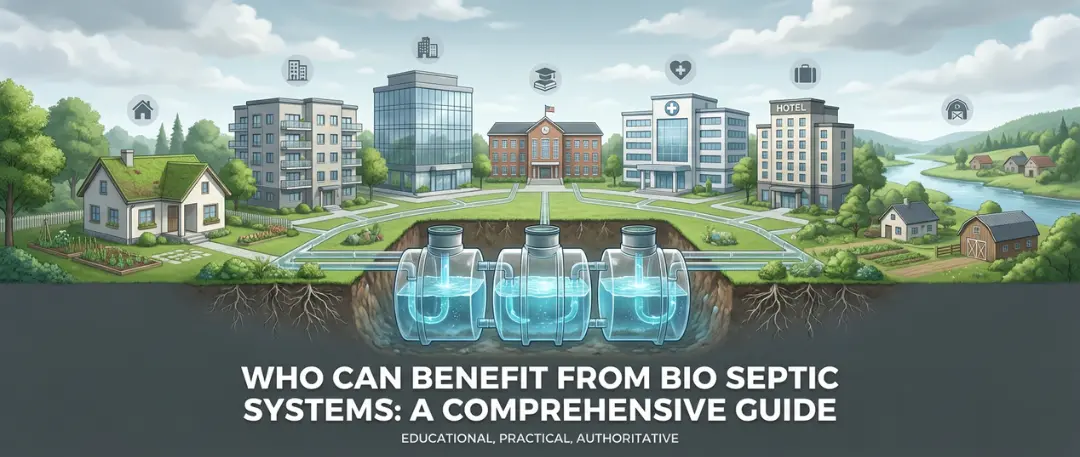
Effective wastewater management has become a critical aspect of modern living. As urbanization accelerates and residential, commercial, and industrial spaces expand, traditional septic systems often fail to meet hygiene, efficiency, and sustainability requirements. This is where bio septic systems have emerged as a smart, eco-friendly, and cost-effective solution.
Bio septic systems utilize natural bacterial processes to break down waste, offering a low-maintenance, odor-free, and environmentally safe alternative. In this guide, we explore who can benefit most from these systems and how they can transform the way we manage wastewater.
Residential Homes
- Ideal Applications
Bio septic systems are particularly beneficial for homes of all sizes, including individual villas, gated communities, and housing societies. Residential spaces often face challenges with traditional septic tanks, such as frequent pumping, unpleasant odors, limited capacity, and the risk of environmental contamination. Bio septic systems address these issues efficiently while ensuring long-term convenience and safety.
- Benefits for Homeowners
One of the primary advantages of bio septic systems in homes is reduced maintenance requirements. Traditional septic tanks demand regular cleaning and pumping, which can be both time-consuming and costly. In contrast, bio septic systems rely on natural bacterial activity to break down organic waste, significantly lowering the need for maintenance.
Cost efficiency is another significant benefit. With less frequent servicing required, homeowners save on ongoing expenses. Additionally, the treated water can be safely reused for gardening, landscaping, or flushing toilets, reducing water bills and promoting sustainable living.
Bio septic systems also enhance health and hygiene. By eliminating foul odors and preventing mosquito breeding, these systems create a safer and cleaner living environment for families.
- Case Study: Residential Application
In a gated community with 12 villas, bio septic systems were installed to manage wastewater. Within a year, maintenance costs dropped by 60%, treated water was reused for landscaping, and residents reported no odor issues. This demonstrated that bio septic systems offer a practical, sustainable solution for modern homes.
Commercial Establishments
- Ideal Applications
Commercial establishments that generate substantial wastewater can benefit greatly from bio septic systems. Typical applications include hotels, resorts, hospitals, office complexes, and educational institutions. These facilities require consistent, reliable, and safe sewage treatment to meet sanitation standards and operational needs.
- Benefits for Commercial Properties
Scalability is a key advantage. Bio septic systems can be tailored to handle wastewater volumes from small hotels to large resorts efficiently. Their design ensures consistent performance even under high usage.
Compliance with local sanitation laws and environmental regulations is critical for commercial establishments. Bio septic systems provide effective wastewater treatment, ensuring adherence to municipal and environmental guidelines. Additionally, these systems contribute to green initiatives, making them suitable for organizations pursuing sustainability certifications or corporate social responsibility goals.
Financially, bio septic systems help reduce operational costs. Unlike traditional systems, which require frequent cleaning and chemical treatments, bio septic tanks operate with minimal intervention, saving both time and money.
- Case Study: Hotel Installation
A resort with over 50 rooms installed a bio septic system to handle its wastewater. Over two years, the system consistently delivered odor-free operation, enabled treated water reuse for landscaping, and ensured compliance with environmental regulations. The investment proved to be economical, efficient, and environmentally responsible.
Industrial Applications
- Ideal Applications
Industries generating organic wastewater are ideal candidates for bio septic systems. These include food processing units, small-scale manufacturing facilities, pharmaceutical units, and research laboratories. Industrial wastewater often contains high levels of organic matter, making traditional treatment methods less efficient and more expensive.
- Benefits for Industrial Use
Bio septic systems help industries maintain environmental compliance by effectively treating wastewater before discharge, preventing pollution and regulatory violations. This ensures businesses avoid fines and maintain a positive public image.
Cost reduction is another benefit. Industrial wastewater treatment using conventional methods often requires chemicals, energy, and frequent maintenance. Bio septic systems reduce these costs by naturally breaking down organic waste with minimal intervention.
The reuse of treated water is also a significant advantage. Industries can use treated effluent for cleaning, irrigation, or other non-potable applications, reducing overall water consumption and operational expenses.
- Case Study: Industrial Implementation
A food processing unit installed a bio septic system to treat its organic wastewater. Within the first year, the facility reduced its reliance on chemical treatments, maintained compliance with environmental regulations, and reused treated water for cleaning and gardening purposes. The system provided both financial and ecological benefits.
Advantages of Bio Septic Systems Across Sectors
Bio septic systems offer consistent benefits across residential, commercial, and industrial applications. They are low-maintenance, reduce operating costs, enable water reuse, and promote environmental sustainability. Unlike traditional systems, bio septic systems provide odor-free operation, safer wastewater disposal, and a longer lifespan.
For residential users, they ensure cleaner homes and safer living conditions. Commercial properties benefit from operational efficiency, regulatory compliance, and green credentials. Industries gain a cost-effective, sustainable, and compliant solution for treating large volumes of organic wastewater.
Choosing the Right Bio Septic System
Selecting an appropriate system requires consideration of several factors:
- Wastewater volume: The number of residents, employees, or industrial output determines the system’s capacity.
- Space availability: The property’s area affects the size and design of the tank.
- Regulatory requirements: Compliance with local municipal and environmental laws is essential.
- Reuse requirements: Determine whether treated water will be used for irrigation, flushing, or other applications.
Professional consultation ensures the system is correctly sized, designed, and installed, optimizing efficiency and lifespan.
Maintenance and Operational Tips
Even with bio septic systems, periodic maintenance ensures peak performance. Best practices include:
- Conducting routine inspections every 6–12 months to check for blockages or damage.
- Adding bacterial culture supplements as recommended to maintain effective waste breakdown.
- Avoiding the disposal of harsh chemicals, industrial solvents, or non-organic waste into the system.
- Monitoring treated water quality before reuse to ensure it is safe for non-potable applications.
With proper care, bio septic systems can operate efficiently for over a decade with minimal intervention.
Conclusion
Bio septic systems are redefining wastewater management across residential, commercial, and industrial sectors. They offer long-term efficiency, cost savings, environmental sustainability, and improved hygiene. Whether for a family home, a hotel, or an industrial facility, investing in a bio septic system is a smart decision for today and the future.
By choosing a bio septic system, users not only manage wastewater effectively but also contribute to environmental protection, reduce operational costs, and ensure compliance with local regulations.
Adopting bio septic technology is more than just a sewage solution—it is a step toward sustainable, responsible, and hygienic living.
1 Can bio septic systems be installed in small homes?
2 How long does a bio septic system last?
3 Is electricity required for operation?
4 Can the treated water be reused safely?
Yes, treated effluent is safe for non-potable uses such as gardening, flushing, or cleaning.
5 Are bio septic systems environmentally friendly?
Absolutely. They reduce pollution, minimize chemical use, conserve water, and comply with environmental regulations.