
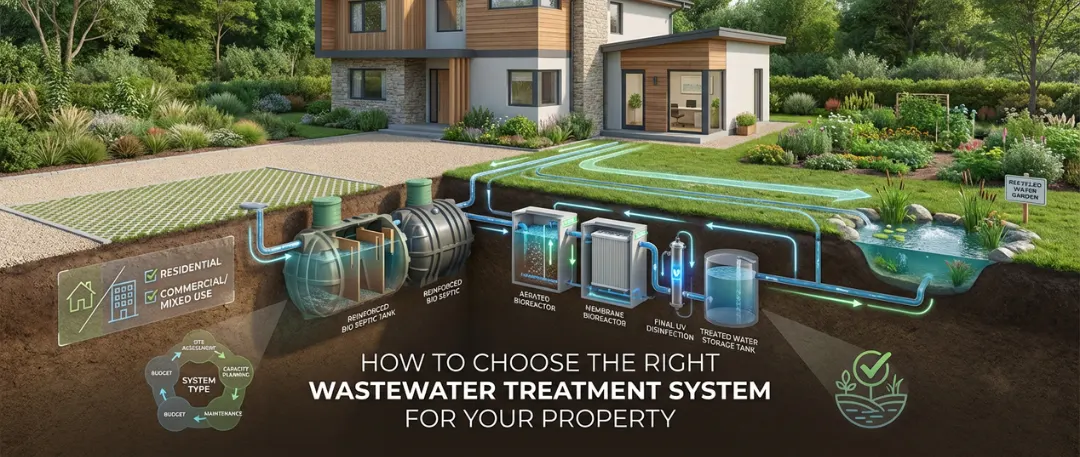
How to Choose the Right Wastewater Treatment System for Your Property
Managing wastewater is one of the most critical aspects of maintaining a healthy, hygienic, and environmentally responsible property. Whether you own a home, commercial building, or industrial facility, selecting the right wastewater treatment system can save you money, prevent environmental damage, and ensure compliance with regulations. This guide provides a step-by-step approach to choosing the system that best suits your property’s needs.
Understanding Wastewater Treatment Systems
Wastewater treatment systems are designed to treat sewage and effluent from homes, commercial establishments, and industries before safely discharging it into the environment or reusing it. The main types of systems include:
- Septic Tanks: Traditional systems that separate solids from liquid and rely on soil absorption for treatment.
- Bio-Septic Tanks / Bio-Digesters: Advanced systems using natural bacteria to break down waste efficiently.
- Package Sewage Treatment Plants (STPs): Compact units for commercial or high-load properties.
- Aeration-Based Treatment Systems: Use oxygen to accelerate bacterial decomposition.
Choosing the right system depends on several factors, including property type, wastewater volume, space availability, soil type, environmental considerations, and budget.
Step 1: Assess Your Property’s Wastewater Needs
Before selecting a system, it’s essential to understand how much wastewater your property generates. Consider the following:
- Residential Properties: A standard family of four produces approximately 400-600 liters of wastewater daily.
- Commercial Properties: Restaurants, hotels, or offices generate significantly higher volumes that require larger systems.
- Industrial Properties: May require specialized treatment to handle chemical or high-strength wastewater.
Tip: Conducting a detailed wastewater audit helps in sizing the system correctly, preventing overloading, and reducing maintenance issues.
Step 2: Evaluate Site Conditions
Site-specific factors play a crucial role in determining the type of wastewater treatment system that can be installed:
- Soil Permeability: For systems that rely on soil absorption, such as conventional septic tanks, sandy soils are ideal, while clay-heavy soils may require advanced bio-digesters or package STPs.
- Space Availability: Bio-septic tanks require less space compared to conventional systems, making them suitable for urban homes.
- Groundwater Levels: Properties in areas with high water tables may need sealed or elevated systems to prevent contamination.
Engaging a professional for a site survey ensures the system fits both the property and environmental conditions.
Step 3: Determine Treatment Level Requirements
Different properties and locations may have regulatory or practical requirements for wastewater treatment:
- Primary Treatment: Removes solids and reduces organic load, typically in septic tanks.
- Secondary Treatment: Uses microbial action to significantly reduce organic matter and pathogens. Bio-septic tanks usually provide this level.
- Tertiary Treatment: Advanced purification to remove nutrients, chemicals, and pathogens, often required for industrial discharge or water reuse.
Assessing these needs ensures your system meets both local regulations and your reuse goals.
Step 4: Consider Maintenance and Operational Requirements
All wastewater treatment systems require maintenance, but the type and frequency vary:
- Septic Tanks: Require regular desludging every 2-3 years.
- Bio-Septic Tanks: Low-maintenance due to self-sustaining bacteria; may require occasional bacterial additive replenishment.
- STPs / Aeration Systems: Require electricity, periodic filter cleaning, and monitoring for optimal operation.
Tip: A system with automated features or low-maintenance design saves long-term costs and ensures continuous operation.
Step 5: Evaluate Budget and Long-Term Costs
Cost considerations include:
- Initial Installation: Bio-septic tanks may have higher upfront costs than traditional septic tanks but offer better efficiency.
- Maintenance Costs: Low-maintenance systems reduce recurring expenses.
- Environmental Fines and Compliance: Investing in the right system avoids penalties for non-compliance with wastewater regulations.
A balance between upfront cost, operational efficiency, and long-term sustainability should guide your decision.
Step 6: Explore Sustainability and Water Reuse Opportunities
Modern wastewater treatment systems not only treat sewage but also allow water reuse for:
- Landscape irrigation
- Toilet flushing
- Industrial cooling or processes
Choosing a system that supports safe water reuse helps conserve water, reduces utility costs, and promotes sustainable living.
Step 7: Choose a Reliable Supplier or Installer
Selecting the right supplier is critical for long-term performance:
- Look for experience in residential, commercial, or industrial systems.
- Ensure compliance with local standards and certifications.
- Check after-sales support, warranty, and maintenance services.
Professional installation ensures the system operates efficiently and lasts for years.
Step 8: Plan for Future Expansion
If your property usage may increase (family growth, business expansion), consider scalable solutions:
- Bio-septic tanks can be modular.
- STPs can be designed for phased capacity.
- Advanced aeration systems can handle incremental wastewater volumes.
Planning ahead avoids costly upgrades in the future.
Key Takeaways
- Assess your wastewater volume and property type.
- Consider site conditions like soil type, space, and groundwater levels.
- Choose a system that meets regulatory treatment requirements.
- Evaluate maintenance needs, costs, and sustainability.
- Partner with a reliable supplier for installation and support.
- Plan for future growth and water reuse opportunities.
By following these steps, you can select a wastewater treatment system that ensures hygiene, sustainability, and compliance while protecting your property and the environment.
1 How do I know if my property needs a bio-septic tank or a conventional septic tank?
2 How much space is needed for a residential bio-septic tank?
3 How often should a bio-septic tank be maintained?
4 Can treated water from a bio-septic tank be reused?
Yes, treated water is safe for irrigation, gardening, or flushing purposes, depending on local guidelines and the level of treatment provided.
5 Are there government regulations for wastewater treatment in residential properties?
Yes, local municipal bodies and environmental authorities regulate wastewater treatment. Bio-septic tanks are often approved as per sanitation standards.