
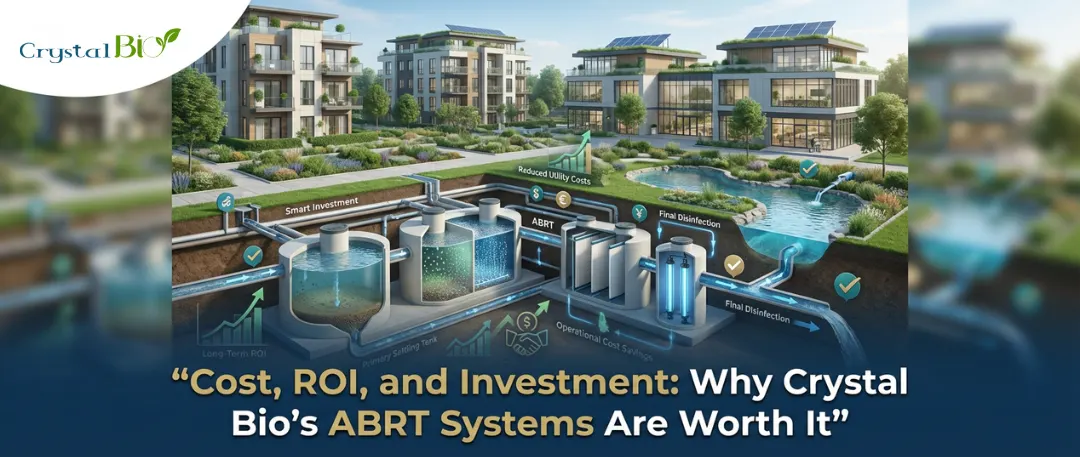
Cost, ROI, and Investment: Why Crystal Bio’s ABRT Systems Are Worth It
When it comes to managing wastewater for homes, apartments, or commercial buildings, many property owners in Trichy face a common dilemma: choosing between conventional septic tanks and modern bio-septic solutions. While traditional septic systems may have a lower upfront cost, advanced systems like Crystal Bio’s Advanced Anaerobic Bio-Reactor (ABRT) technology offer significant advantages in efficiency, maintenance, compliance, and long-term financial returns.
This blog explores the cost, return on investment (ROI), and financial benefits of installing a Crystal Bio ABRT system, helping property owners make informed decisions for sustainable wastewater management.
Understanding the Investment in a Bio Septic Tank
A bio septic tank is not just a storage tank; it is a self-contained wastewater treatment system that uses biological processes to treat sewage. Crystal Bio’s ABRT system employs an eight-stage anaerobic digestion process that efficiently reduces sludge, eliminates foul odour, and produces clear effluent suitable for certain non-potable uses such as gardening or flushing.
The initial cost of an ABRT system is higher than a conventional septic tank, but this upfront investment translates into long-term financial savings and environmental benefits. Understanding these costs in detail is crucial for homeowners, apartment associations, and commercial establishments.
Components of the Investment
When considering the installation of a Crystal Bio ABRT system, the cost generally includes system purchase, site assessment, custom design, installation, and optional features. The ABRT reactor is designed to be durable and capable of handling varying wastewater loads. The purchase cost reflects the high-quality materials, multi-stage design, and specialized biological media that enhance digestion efficiency.
Crystal Bio conducts an on-site evaluation to determine the ideal tank size, layout, and discharge plan, ensuring that the system meets the specific needs of residential or commercial properties. Installation includes excavation, plumbing connections, proper placement of the reactor, and commissioning, including system testing and training for building maintenance staff. Optional features such as automation, remote monitoring, or additional treatment stages can slightly increase the cost but improve convenience and operational efficiency.
Although ABRT systems are designed for low-maintenance operation, periodic inspection and sludge removal may be required, usually every 3–5 years. Crystal Bio offers service packages to ensure optimal system performance.
Comparing Conventional Septic Tanks and ABRT Systems
While traditional septic tanks may cost less upfront, their long-term expenses—including maintenance, desludging, potential repairs, and environmental risks—can outweigh the initial savings. Conventional systems often require frequent maintenance, produce higher sludge volumes, and emit foul odours, which can affect property value, tenant satisfaction, and overall hygiene.
Crystal Bio ABRT systems, on the other hand, offer odour-free operation, reduced sludge, and clear effluent that can sometimes be reused for non-potable purposes. They also meet modern environmental standards, reducing the risk of fines or upgrades and saving long-term costs. Although the initial investment is higher, the life-cycle cost and overall ROI are far superior compared to conventional septic tanks.
How Low-Maintenance Wastewater Systems Reduce Long-Term Costs
ABRT systems reduce maintenance costs significantly. They require less frequent desludging, often only every 3–5 years, compared to annual cleaning required by conventional septic tanks. The durable design and advanced biological treatment minimize blockages and mechanical failures, reducing repair costs over time.
Odour-free operation also prevents nuisance-related complaints and protects property value. Furthermore, ABRT systems are designed to comply with local environmental regulations in Tamil Nadu, avoiding fines or legal complications. In many cases, the treated effluent can be used for gardening or flushing, further reducing water costs and contributing to long-term savings.
Financing and Support Options
Understanding the upfront cost is important, but property owners may consider financing options to make ABRT systems more accessible. Crystal Bio offers flexible payment plans for residential and commercial customers, reducing immediate financial burdens. Some eco-friendly wastewater treatment solutions may qualify for government subsidies or incentives under state or central schemes focused on water management and sanitation.
For commercial projects such as hotels, resorts, and institutional buildings, financing packages may be available to support infrastructure upgrades. Crystal Bio also provides end-to-end service, from site assessment to installation and training, ensuring a smooth experience and minimizing unexpected expenses.
Environmental ROI: Beyond Financial Gains
The ABRT system not only provides financial ROI but also environmental returns. By reducing sludge production and treating wastewater efficiently, these systems help prevent contamination of groundwater and surface water. They also lower the carbon footprint through energy-efficient anaerobic digestion.
Additionally, ABRT systems enhance community hygiene, reduce public health risks, and contribute to sustainable development goals. For commercial clients, this can support corporate social responsibility initiatives, making the system a sound investment on multiple levels.
Case Example: Residential Villa in Trichy
Consider a 5-bedroom villa in Tennur, Trichy. A conventional septic tank may have a lower upfront cost but requires annual desludging and maintenance. A Crystal Bio ABRT system requires a higher initial investment, but with maintenance only every few years, odour-free operation, regulatory compliance, and potential water reuse, the long-term benefits justify the cost.
Homeowners report improved convenience, better hygiene, and satisfaction with clear, odour-free treated water, which is suitable for non-potable reuse. Over time, the system’s durability and performance offer a higher overall return on investment.
Conclusion
Investing in a Crystal Bio ABRT system may have a higher upfront cost than conventional septic tanks, but the long-term financial, operational, and environmental benefits make it a worthwhile choice. Property owners in Trichy and Tamil Nadu can save money on maintenance, reduce nuisance, comply with regulations, and enjoy a sustainable wastewater treatment solution for years to come.
When evaluating wastewater solutions, it is important to consider life-cycle costs, ROI, and overall benefits rather than just initial expenditure. ABRT systems offer a smart, low-maintenance, eco-friendly solution suitable for residential, commercial, and institutional applications.
1 How much does a bio septic tank from Crystal Bio cost?
The cost depends on system size, site conditions, and capacity. Residential units typically start at moderate investment levels, while commercial systems are customized. Contact Crystal Bio for a detailed quote.
2 What is the ROI of an ABRT system?
ROI includes savings from lower maintenance, reduced desludging, odour control, regulatory compliance, and potential water reuse. Over 10–15 years, these savings outweigh the higher upfront cost compared to conventional septic tanks
3 How often does the ABRT system require maintenance?
Typically every 3–5 years, depending on load and usage. Regular inspections ensure optimal performance.
4 Can the treated water be reused?
Yes. Treated effluent is clear and odour-free, suitable for gardening, flushing, and other non-potable uses, subject to local regulations.
5 Are financing options available for homeowners?
Yes. Crystal Bio provides flexible payment plans and can guide customers regarding government incentives or commercial financing options.