
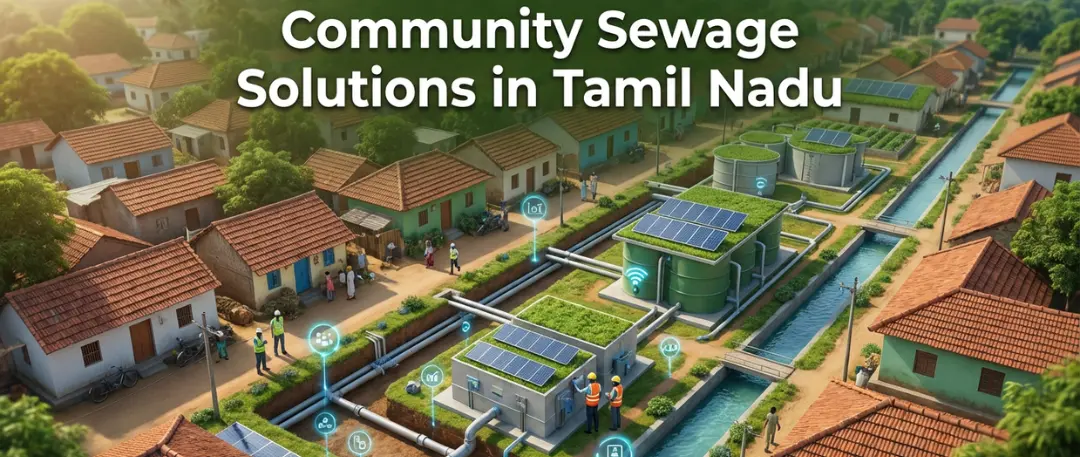
Community Sewage Solutions in Tamil Nadu
Scaling Bio Septic Technology
Wastewater management is one of the most pressing challenges in Tamil Nadu today. With rapid urbanization, the rise of multi-storey apartments, and growing gated communities, traditional septic systems are no longer sufficient. They were designed decades ago for small households, not for modern community living where hundreds of people generate waste every day.
Conventional septic tanks often lead to frequent desludging, foul odors, and groundwater pollution. In a state where clean water is already a precious resource, these problems cannot be ignored. Communities need a hygienic, eco-friendly, and long-term sewage solution.
This is where bio septic technology has become a game-changer in Tamil Nadu. It offers a maintenance-free, odor-free, and scalable system that suits the unique needs of schools, apartments, and townships.
Why Traditional Septic Tanks Fail in Tamil Nadu Communities
Most communities in Tamil Nadu still rely on conventional septic tanks, but their drawbacks are well known:
- High maintenance: Frequent desludging by sewage lorries, leading to recurring costs.
- Unhygienic environment: Overflow and odor issues in densely populated areas.
- Groundwater contamination: Leakage of untreated effluents pollutes soil and water.
- Non-compliance: Difficulty in meeting Tamil Nadu Pollution Control Board standards.
When these issues are multiplied across apartments, schools, or entire gated communities, they create severe public health and environmental hazards.
How Bio Septic Technology Fits Community Living
Bio septic tanks are designed with anaerobic bacterial treatment that continuously digests waste without chemicals. The system is engineered to handle large loads of sewage, making it suitable for schools, apartments, and housing colonies.
Key Features for Tamil Nadu Communities
- Modular Design: Units can be expanded as the population grows.
- Odor-Free Sanitation: No foul smell, even in high-density neighborhoods.
- No Desludging Required: Eliminates dependence on sewage lorries.
- Water Reuse: Treated water can be used for gardening, flushing, or groundwater recharge.
Eco-Friendly: Prevents soil and water contamination.
Applications Across Tamil Nadu
1. Schools and Educational Institutions
Schools across Tamil Nadu face sanitation challenges with large student populations. Bio septic tanks ensure clean, odor-free campuses without recurring desludging costs. They support Swachh Bharat and state government initiatives for hygiene in schools.
2. Apartments and Multi-Storey Buildings
In cities like Trichy, Coimbatore, and Chennai, apartment living is on the rise. Bio septic systems allow centralized sewage treatment for all flats, ensuring long-term savings, odor-free living, and compliance with DTCP and RERA regulations.
3. Gated Communities and Townships
Large housing layouts and gated communities benefit from bio septic tanks by ensuring a self-sustaining sewage system. Recycled water can be used for landscaping, parks, and common toilets, reducing freshwater demand.
4. Rural Villages and Small Towns
Many rural areas in Tamil Nadu still lack proper sewage management. Bio septic tanks are affordable, easy to install, and provide safe sanitation in areas where desludging services are difficult to access. They also help prevent open drainage and contamination of village water sources.
Compliance with Tamil Nadu Regulations
Bio septic systems are approved and supported by local authorities because they:
- Prevent untreated sewage from polluting the environment.
- Reduce reliance on manual waste handling.
- Comply with Tamil Nadu Pollution Control Board, DTCP, and RERA requirements.
- Support sustainable housing projects in line with government goals.
For builders, installing bio septic tanks ensures faster approvals, legal compliance, and improved reputation. For communities, it guarantees a clean and healthy environment.
Benefits of Bio Septic Tanks for Tamil Nadu Communities
- Cost Savings: No need to spend on frequent desludging.
- Eco-Friendly: Conserves water and protects groundwater from contamination.
- Scalable: Can be adapted for both small villages and large townships.
- Hygienic: Odor-free, mosquito-free, and pathogen-free sanitation.
Future-Ready: Supports Tamil Nadu’s growing demand for sustainable housing.
Conclusion
Tamil Nadu’s growing communities need sustainable sewage solutions that go beyond outdated septic tanks. Bio septic technology has emerged as a future-ready system that suits apartments, schools, gated communities, and even rural villages. By offering odor-free sanitation, water reuse, and compliance with government norms, bio septic tanks are not just a convenience—they are a long-term investment in health, hygiene, and sustainability.
As Tamil Nadu continues to urbanize and modernize, adopting bio septic systems will be essential for building cleaner, greener, and healthier communities.
1 Can bio septic tanks work for apartments in Tamil Nadu?
Yes. They are ideal for apartment complexes and can treat sewage from hundreds of families in a single system.
2 Are they useful for rural schools and hostels?
Absolutely. Schools and hostels benefit from hygienic, low-maintenance sanitation without the need for sewage lorries.
3 Is the treated water safe for reuse?
Yes. The water is free from harmful bacteria and can be reused for gardening, flushing, and recharging the groundwater.
4 How do bio septic tanks help gated communities?
They provide a centralized sewage solution that is odor-free, cost-effective, and compliant with government norms. Treated water can also be used for landscaping and community facilities.
5 Are bio septic tanks approved in Tamil Nadu?
Yes. They comply with Tamil Nadu Pollution Control Board, DTCP, and RERA standards, making them a trusted choice.
6 What is the lifespan of a bio septic tank?
A properly installed system lasts 30–50 years, making it a reliable long-term investment.