
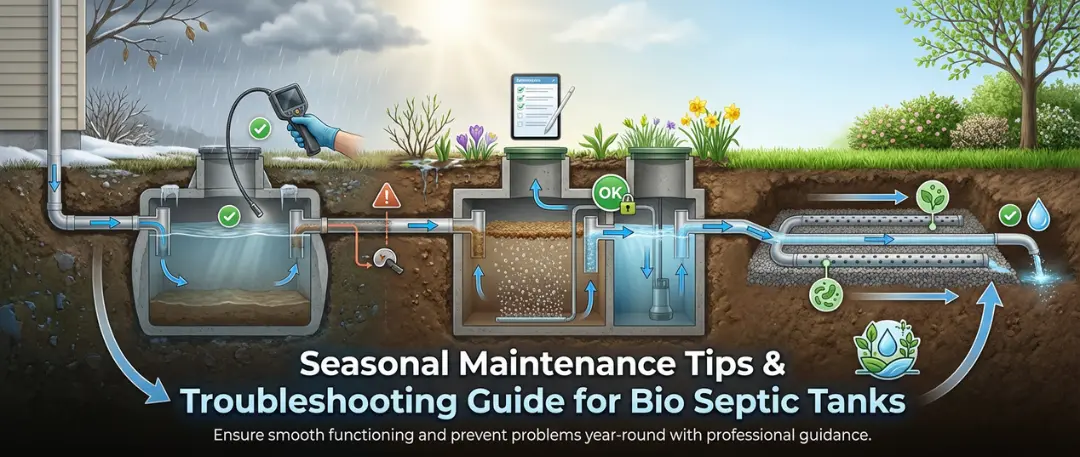
Maintaining a bio septic tank is essential to ensure its efficiency, longevity, and hygienic operation. While bio septic tanks are designed to be low-maintenance compared to conventional sewage systems, they still require periodic care, particularly with seasonal changes. Neglecting maintenance can lead to unpleasant odors, clogs, reduced efficiency, or costly repairs. This guide provides a comprehensive overview of seasonal maintenance tips and troubleshooting techniques to keep your bio septic tank operating optimally.
Understanding Your Bio Septic Tank
A bio septic tank is an eco-friendly sewage treatment system that uses anaerobic bacteria to break down organic waste, converting it into harmless effluent that can safely percolate into the soil. Unlike traditional septic tanks, bio septic systems are designed to minimize sludge accumulation, reduce foul odors, and require less frequent cleaning. However, regular monitoring and seasonal care are still critical for optimal performance.
Key components of a bio septic tank include:
- Inlet chamber: Where wastewater enters the system.
- Biological treatment chamber: Where bacteria break down organic matter.
- Outlet/effluent chamber: Releases treated water into a soak pit or drain field.
- Baffles and filters: Ensure smooth flow and prevent clogging.
Understanding these components helps in identifying problems and performing seasonal maintenance effectively.
Seasonal Maintenance Tips
1. Summer Maintenance
During the hot summer months, the bacterial activity inside a bio septic tank can increase due to higher temperatures. While this may improve waste breakdown, it also requires careful attention to prevent dehydration and excessive bacterial die-off.
- Inspect water levels: High temperatures can lead to faster evaporation in external soak pits. Ensure adequate water flow into the tank.
- Add bio-culture periodically: Boost bacterial activity by adding bio-culture solutions, especially during prolonged dry spells.
- Check for odors: High bacterial activity can occasionally produce strong odors. Ensure vents are clear and unobstructed.
- Clean inlet filters: Summer dust and debris can block inlet filters. Clean them every 2-3 months to prevent clogs.
2. Monsoon Maintenance
Rainy seasons can increase water inflow, leading to potential overflow or system stress. Excess rainwater may also dilute bacterial activity, reducing treatment efficiency.
- Inspect for overflow: Check that the outlet is free of obstructions and that effluent is draining properly.
- Avoid heavy water usage spikes: Discourage washing large volumes of water simultaneously to prevent system overload.
- Clean drainage channels: Ensure that external drainage systems connected to the bio septic tank are free from leaves, silt, and debris.
- Check for waterlogging: Prolonged waterlogging around the soak pit can slow down percolation. Improve drainage if needed.
3. Winter Maintenance
During colder months, bacterial activity may slow down, reducing the breakdown of organic matter. Proper care ensures that the system remains efficient and odor-free.
- Monitor bacterial health: Consider adding bio-culture boosters if the tank is under heavy load.
- Check for freezing risk: In colder regions, exposed pipes or vents may freeze. Insulate them if necessary.
- Minimize chemical usage: Avoid using harsh chemicals or disinfectants that can harm bacteria during low-activity months.
- Inspect the system: Look for any cracks or damages in the tank and soak pit caused by cold weather contraction.
4. General Maintenance Practices
Regardless of the season, certain practices should be followed year-round:
- Regular sludge inspection: Although bio septic tanks require less frequent cleaning, inspect sludge levels annually and desludge if necessary.
- Avoid non-biodegradable waste: Do not dispose of plastics, sanitary napkins, or chemicals in the system.
- Use eco-friendly detergents: Chemical-laden soaps can disrupt bacterial activity.
- Routine inspections: Check the tank and associated plumbing at least twice a year for leaks, cracks, or unusual sounds.
- Proper vent maintenance: Ensure air vents are clear to allow anaerobic bacteria to function efficiently.
Troubleshooting Common Issues
Even with regular maintenance, bio septic tanks can face minor issues. Understanding common problems and solutions helps prevent costly repairs.
1. Foul Odor
Causes:
- Poor ventilation
- Excessive chemical usage
- Overloaded system
Solutions:
- Clean vent pipes
- Reduce chemical usage
- Ensure proper wastewater flow into the tank
- Add bio-culture boosters
2. Slow Drainage
Causes:
- Clogged inlet or outlet pipes
- Overloaded system
- Soil compaction around soak pit
Solutions:
- Clean filters and pipes
- Limit high-water usage at a time
- Aerate soil around the soak pit if needed
3. Overflow or Backflow
Causes:
- Heavy rainfall
- Blocked effluent outlet
- Excessive household water usage
Solutions:
- Clear outlet pipes and soak pit
- Use flow restrictors during rainy season
- Inspect for tank cracks
4. Reduced Treatment Efficiency
Causes:
- Low bacterial activity
- Harsh chemicals entering the tank
- Low water flow
Solutions:
- Add bio-culture regularly
- Stop using antibacterial cleaners or harsh detergents
- Ensure regular water flow into the system
Best Practices for Longevity
- Schedule annual professional inspections to ensure the system remains in top condition.
- Maintain a log of water usage to prevent system overload.
- Educate all household members about dos and don’ts of the bio septic system.
- Use eco-friendly cleaning agents and avoid pouring grease, oils, or non-biodegradable substances into sinks.
Conclusion
Seasonal maintenance is crucial for ensuring the long-term performance of a bio septic tank. By understanding how the system works, performing regular inspections, and addressing issues promptly, you can enjoy a low-maintenance, eco-friendly, and hygienic wastewater management solution. Following these tips not only enhances the efficiency of your bio septic system but also prolongs its lifespan, saves money, and contributes to environmental sustainability.
For professional installation, seasonal check-ups, and expert troubleshooting support, consider consulting certified providers who specialize in bio septic systems.