
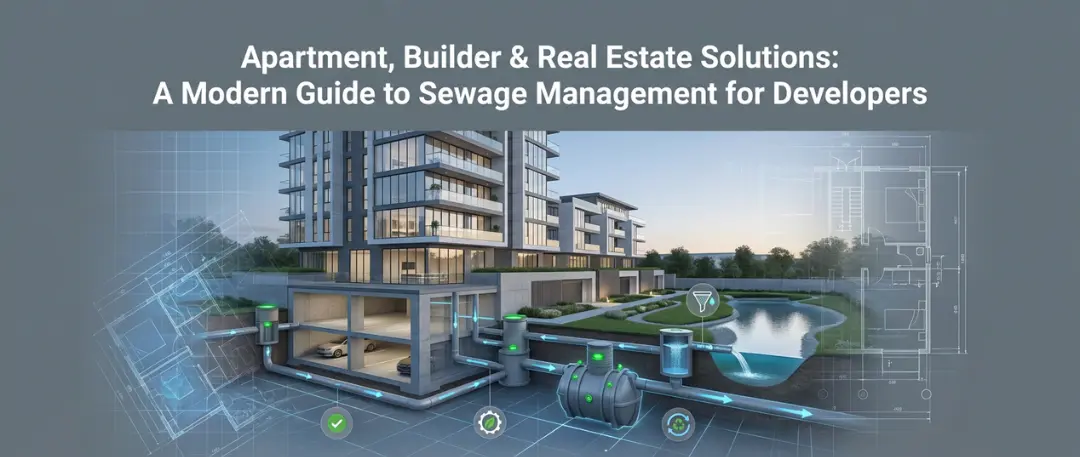
In today’s real estate landscape, sewage management is no longer just a backend utility—it is a critical planning component that affects project approvals, long-term maintenance costs, environmental compliance, and buyer perception. As urban density increases and regulations tighten, builders, promoters, architects, and project consultants must rethink how sewage systems are designed and implemented in apartment projects.
Traditional septic tanks and centralized sewage connections are increasingly proving inadequate due to space constraints, rising operational costs, and stricter pollution control norms. This has led to a growing shift toward modern, decentralized, and eco-friendly sewage solutions—especially bio-septic tanks.
This comprehensive guide explores how bio-septic technology is transforming sewage management in apartment projects, why builders are switching to it, and how it helps developers achieve faster construction, regulatory compliance, and long-term cost efficiency.
The Changing Landscape of Sewage Management in Apartment Projects
Urban residential developments today face multiple challenges:
- Limited land availability
- Increasing apartment density
- Environmental clearance requirements
- Rising expectations from homebuyers
- High operational and maintenance costs
Earlier, sewage systems were often treated as an afterthought. Today, improper planning can lead to approval delays, legal penalties, resident complaints, and expensive retrofits.
Modern apartment projects require sewage solutions that are:
- Compact and space-efficient
- Environmentally compliant
- Low-maintenance
- Scalable for future expansion
- Quick to install
Bio-septic tanks address these challenges effectively, making them an ideal solution for modern residential developments.
Sewage Management Solutions for Apartments
Apartment sewage management typically falls into three categories:
- Centralized Sewer Connections
Used in city cores where municipal sewer lines are available. While convenient, they depend heavily on local infrastructure, which is often overloaded.
- Conventional Septic Tanks
Common in semi-urban areas, but they require frequent desludging, occupy large spaces, and often fail pollution norms.
- Bio-Septic Tank Systems
A decentralized, advanced solution that treats sewage biologically using anaerobic bacteria, reducing sludge generation and eliminating the need for frequent cleaning.
For builders developing apartments in growing cities, tier-2 towns, or outskirts, bio-septic tanks offer the most balanced and future-ready solution.
Builder’s Guide to Bio-Septic Tank Installation
Bio-septic tank installation is straightforward when planned early in the project lifecycle.
Here is a step-by-step overview for builders and developers:
Site Assessment and Capacity Planning
The system is designed based on:
- Number of residential units
- Average daily water usage
- Occupancy load
- Local soil conditions
Proper sizing ensures efficient treatment and long system life.
Design Integration
- Bio-septic tanks can be:
- Installed underground
- Placed beneath parking areas
- Integrated into landscaped zones
This flexibility helps architects maintain aesthetics and optimize land usage.
Pre-Fabricated Tank Installation
Most bio-septic tanks are factory-made, which ensures:
- Consistent quality
- Faster installation
- Minimal on-site construction work
Installation usually takes only a few days.
Plumbing and Inlet/Outlet Connections
The tank is connected to:
- Internal sewage lines
- Treated water outlets for safe discharge or reuse
Once connected, the system becomes operational immediately.
Why Builders Are Switching to Bio-Septic Technology
The adoption of bio-septic systems among builders and promoters has increased rapidly due to multiple advantages:
Reduced Maintenance Costs
- Unlike traditional septic tanks, bio-septic systems:
- Do not require frequent desludging
- Generate minimal solid waste
Reduce long-term operational expenses
Faster Project Execution
Pre-fabricated systems eliminate long curing times and heavy civil work, helping developers meet tight project deadlines.
Regulatory Compliance
Bio-septic tanks meet:
- Pollution Control Board norms
- Environmental clearance requirements
- Local municipal guidelines
This reduces approval risks and legal complications.
Eco-Friendly Branding
Sustainability is a strong selling point in modern real estate. Builders using bio-septic systems can position their projects as environmentally responsible.
Compliance Checklist for Sewage Systems in Apartments
Regulatory compliance is a critical concern for developers. Here is a simplified checklist to ensure sewage systems meet statutory requirements:
- Adherence to State Pollution Control Board norms
- Proper treatment of blackwater and greywater
- No direct discharge of untreated sewage
- Safe disposal or reuse of treated water
- Documentation for environmental clearance
- Periodic inspection readiness
Bio-septic systems are designed to meet these requirements with minimal additional infrastructure, making compliance easier for builders.
Reducing Long-Term Maintenance Costs in Residential Projects
One of the biggest pain points in apartment management is post-handover maintenance. Poor sewage systems often lead to:
- Resident complaints
- Odor issues
- Overflow incidents
- High annual maintenance contracts
Bio-septic tanks significantly reduce these risks by:
- Eliminating the need for frequent tanker services
- Preventing blockages through biological digestion
- Operating without electricity in most cases
For developers, this translates into better reputation, smoother handovers, and fewer post-sale disputes.
Bio-Septic Tanks for Affordable Housing Projects
Affordable housing projects operate under tight budgets and strict timelines. Bio-septic systems are particularly suitable for such developments because they offer:
- Lower lifecycle costs
- Minimal civil construction
- Quick scalability
- Compliance with government housing norms
By reducing operational expenses and infrastructure complexity, builders can maintain affordability without compromising quality.
Pre-Fabricated Sewage Solutions for Fast Construction
Speed is critical in real estate development. Pre-fabricated bio-septic tanks support rapid construction through:
- Factory-controlled manufacturing
- Easy transportation and placement
- Minimal on-site labor
- Immediate usability
For large apartment complexes or phased developments, this significantly reduces project delays and cost overruns.
Role of Architects and Project Consultants
Architects and consultants play a crucial role in integrating sewage systems seamlessly into project layouts. Bio-septic systems provide:
- Design flexibility
- Minimal footprint
- Compatibility with green building certifications
Early collaboration between sewage solution providers and project planners ensures optimized system performance and compliance.
Future-Proofing Apartment Projects with Modern Sewage Solutions
With increasing scrutiny on environmental impact and water management, future apartment projects must adopt systems that are:
- Sustainable
- Low-impact
- Regulation-ready
- Adaptable to future expansions
Bio-septic technology aligns perfectly with these requirements, making it a future-proof investment for builders and developers.
Conclusion: A Smart Sewage Strategy for Modern Builders
For builders, developers, and real estate consultants, sewage management is no longer just an engineering requirement—it is a strategic decision that impacts approvals, project timelines, operational costs, and brand reputation.
Bio-septic tanks offer a modern, compliant, and cost-effective solution tailored to the needs of apartment developments. By adopting pre-fabricated, eco-friendly sewage systems, builders can ensure faster construction, smoother project approvals, and long-term sustainability.
In an industry where efficiency and responsibility define success, bio-septic technology stands out as a smart choice for future-ready residential projects.
1 Are bio-septic tanks suitable for large apartment complexes?
Yes. Bio-septic systems can be customized for small buildings as well as large multi-block apartment projects.
2 How long does a bio-septic tank last?
With proper installation, bio-septic tanks can function efficiently for decades with minimal maintenance.
3 Do bio-septic tanks require electricity?
Most bio-septic systems operate without electricity, relying on natural biological processes.
4 Is treated water from bio-septic tanks safe?
Yes. The treated water meets discharge standards and can be reused for gardening or safely released as per regulations.
5 Are bio-septic tanks approved by government authorities?
Bio-septic systems that meet Pollution Control Board standards are widely accepted for residential projects.