
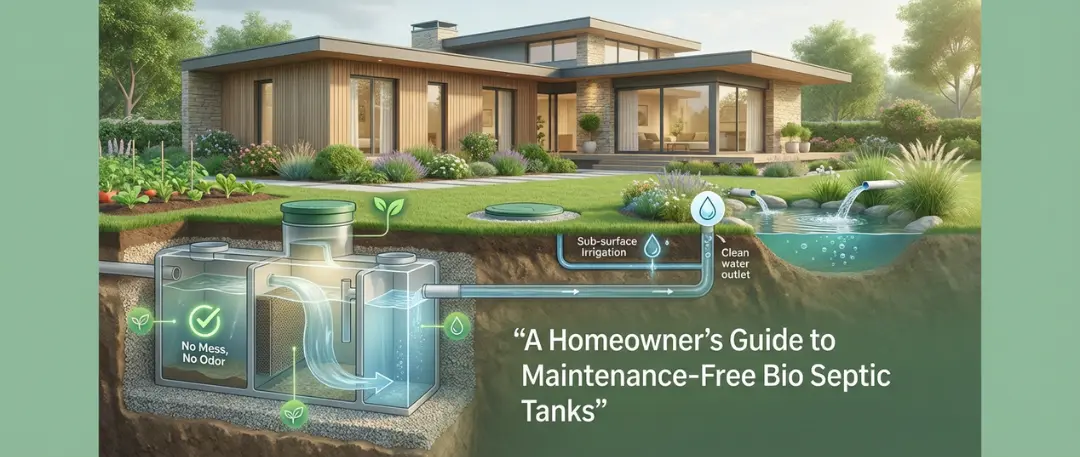
A Homeowner’s Guide to Maintenance-Free Bio Septic Tanks
When it comes to managing household wastewater effectively, one of the most common challenges faced by homeowners is dealing with septic tank issues. Overflowing tanks, unpleasant odours, and frequent maintenance often lead to frustration and unexpected expenses. Traditional septic systems rely on manual cleaning and desludging, which not only add to recurring costs but also create environmental hazards if not handled properly. Fortunately, advancements in sanitation technology have introduced a smarter and more sustainable solution — the bio septic tank.A bio septic tank is a scientifically engineered wastewater treatment system that uses natural biological processes to decompose waste and convert it into harmless by-products. Unlike conventional tanks that depend heavily on periodic cleaning and chemical additives, bio septic systems rely on beneficial microorganisms to break down organic matter efficiently. This means homeowners can enjoy a maintenance-free and eco-friendly wastewater management system that works continuously without any manual intervention.
Understanding the Concept of a Bio Septic Tank
A bio septic tank functions as a compact, self-contained wastewater treatment unit. It consists of multiple chambers that facilitate the breakdown of solid waste into liquid and gases through bacterial action. The process is entirely natural, requiring no external energy or chemical inputs. When sewage enters the tank, the bacteria inside begin decomposing organic material, converting solids into water, carbon dioxide, and methane.
These treated outputs are safe for the environment and can even be reused for gardening or landscaping purposes. Because of this self-sustaining biological mechanism, a bio septic tank does not require frequent desludging or pumping, making it a truly maintenance-free system for homeowners.
Moreover, bio septic tanks are designed to prevent clogging, foul odour, and groundwater contamination, issues commonly associated with traditional septic systems. The efficiency of this technology ensures that homeowners can enjoy a long-lasting sanitation solution that aligns with both modern living standards and environmental responsibility.
How Bio Septic Tanks Work
The working principle of a bio septic tank revolves around the action of naturally occurring anaerobic and aerobic bacteria. These microorganisms play a vital role in decomposing organic waste materials and purifying the effluent.
Primary Treatment: When wastewater from toilets and bathrooms enters the first chamber of the tank, the heavier solids settle at the bottom. Here, anaerobic bacteria begin breaking down the organic matter, reducing sludge formation.
Secondary Treatment: The partially treated wastewater then moves to the next chamber, where additional bacterial activity further purifies the water.
Final Discharge: In the final stage, the treated water exits the tank as a clear, odourless liquid that can be safely absorbed into the ground or reused for irrigation.
This natural and continuous process ensures that the tank remains functional without human intervention, eliminating the need for frequent cleaning or mechanical maintenance.
Key Advantages of Bio Septic Tanks
- Maintenance-Free Operation:
The most significant advantage of a bio septic tank is that it eliminates the need for periodic cleaning. The bacterial ecosystem inside the tank maintains a self-regenerating process that ensures continuous decomposition of waste. - Odour-Free System:
Unlike conventional systems that often emit foul smells due to decomposition and stagnant waste, bio septic tanks operate without producing any odour. The natural aerobic and anaerobic reactions keep the environment around the tank clean and pleasant. - Eco-Friendly Wastewater Treatment:
A bio septic system contributes to a cleaner environment by preventing untreated sewage from contaminating groundwater sources. The treated water is safe, non-toxic, and can be reused for non-potable applications like watering plants. - Long Lifespan and Durability:
High-quality bio septic tanks made with durable materials like reinforced concrete or HDPE can last for over two decades with proper installation. The system does not corrode or deteriorate easily, ensuring reliability for years. - Space Efficiency:
Bio septic tanks are compact and can be installed in limited spaces, making them ideal for modern residential areas where space is often a constraint. - Cost-Effective in the Long Run:
While the initial installation cost may be higher than a traditional system, the long-term savings from reduced maintenance and desludging make it an economical choice over time.
Applications Beyond Homes
While bio septic tanks are highly suitable for individual houses, their versatility extends to a wide range of establishments, including:
- Apartment complexes
- Schools and colleges
- Hospitals and clinics
- Hotels and resorts
- Industrial facilities
- Office buildings
- Community housing projects
The adaptability of bio septic systems makes them an excellent choice for both residential and commercial applications where efficiency, sustainability, and hygiene are priorities.
The Environmental Impact of Choosing Bio Septic Systems
Wastewater management has become a crucial issue in today’s world, particularly in developing regions where untreated sewage contributes to pollution and waterborne diseases. By switching to a bio septic tank, homeowners take a proactive step toward reducing environmental harm.
These systems eliminate the need for open drainage, preventing the release of pathogens into the environment. Furthermore, the treated effluent helps replenish the soil with nutrients instead of polluting it. The result is a cleaner, safer, and more sustainable ecosystem.
In urban areas where groundwater levels are already under pressure, bio septic systems help reduce contamination and maintain water quality. For rural and semi-urban regions, they serve as a reliable alternative to traditional soak pits and leach fields that often fail over time.
Crystal Bio’s Approach to Maintenance-Free Sanitation
Companies like Crystal Bio specialize in providing advanced, non-filling bio septic tanks that are engineered to meet diverse needs. Their systems are built with precision and are designed to operate efficiently without clogging or manual cleaning.
Crystal Bio’s tanks are customizable based on household size, soil type, and local environmental conditions. They are also equipped with innovative features that promote bacterial growth and ensure optimal wastewater treatment performance. With an emphasis on sustainability, Crystal Bio’s solutions embody the idea of zero-maintenance sanitation, reducing the overall burden on homeowners and the environment alike.
Installation and Care Tips
Although bio septic tanks are designed to be maintenance-free, a few best practices can ensure optimal performance:
- Avoid pouring harsh chemicals, paints, or oils down the drain, as these can kill the beneficial bacteria inside the tank.
- Limit the use of antibacterial soaps or disinfectants in large quantities.
- Ensure proper ventilation to support aerobic bacterial activity.
- Use water efficiently to prevent overloading the system.
- Always consult a professional for installation to ensure correct sizing and placement.
By following these simple guidelines, homeowners can maximize the efficiency and lifespan of their bio septic systems.
Conclusion
A maintenance-free bio septic tank is a practical, eco-friendly, and cost-effective solution for managing household wastewater. It not only saves homeowners from the hassle of frequent cleaning but also contributes to a healthier and more sustainable environment. The technology behind bio septic systems represents a significant leap forward in sanitation management, offering long-term reliability with minimal human effort.
Whether you are building a new home or upgrading an existing one, investing in a bio septic tank from a trusted provider like Crystal Bio ensures you are adopting a cleaner, greener, andsmarter way to manage waste. With the right system in place, you can enjoy a worry-free sanitation solution that supports both your home and the planet.
1 What makes a bio septic tank maintenance-free?
Bio septic tanks rely on naturally occurring bacteria to decompose waste. This continuous biological process removes the need for periodic cleaning or desludging.
2 How long does a bio septic tank last?
With proper installation and usage, a bio septic tank can last more than 20 years without requiring major maintenance.
3 Can the treated water be reused?
Yes, the treated water from a bio septic system can be safely reused for gardening, irrigation, or toilet flushing, depending on the level of treatment.
4 Does a bio septic tank produce odour?
No, the natural bacterial processes within the tank prevent foul odours, ensuring a clean and hygienic environment.
5 Is a bio septic tank suitable for small homes?
Absolutely. Bio septic systems are scalable and can be customized for small homes, apartments, or large commercial establishments.
6 What should not be flushed into a bio septic system?
Avoid flushing plastics, sanitary products, chemicals, or non-biodegradable items, as these can disrupt bacterial activity and damage the system.
7 How is a bio septic tank different from a traditional septic tank?
Traditional septic tanks require periodic cleaning and use chemicals to manage waste. Bio septic tanks, on the other hand, operate naturally, are odour-free, and require no manual maintenance