
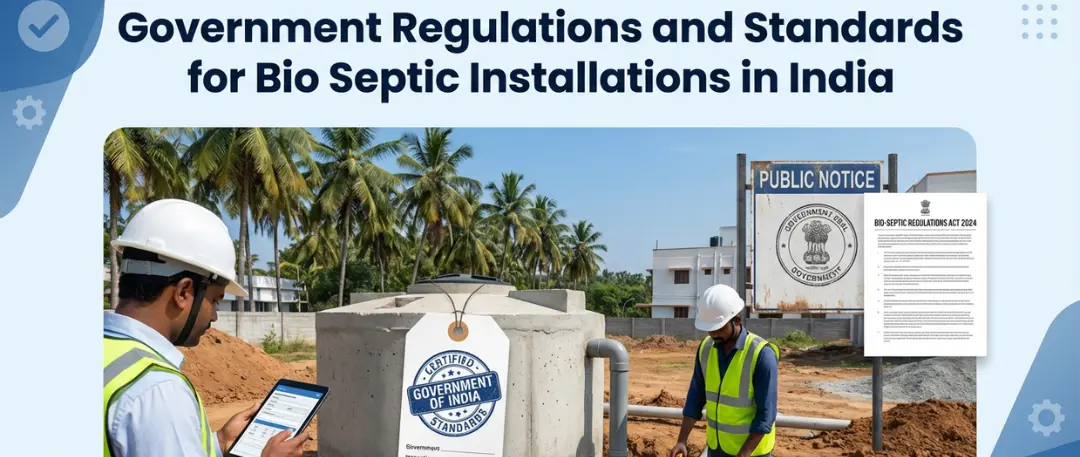
Government Regulations and Standards for Bio Septic Installations in India
Introduction:
In recent years, India has made tremendous strides toward achieving sustainable sanitation under initiatives like Swachh Bharat Mission and Atal Mission for Rejuvenation and Urban Transformation (AMRUT). As part of this green movement, bio septic tanks have emerged as an eco-friendly and low-maintenance alternative to traditional sewage systems. However, installing these systems requires compliance with specific government regulations, guidelines, and standards to ensure environmental safety and efficiency. crystal bio septic tanks are best in it .
This blog explores the legal framework, approval processes, and technical standards governing bio septic systems in India, along with insights into their environmental and social benefits.
What Are Bio Septic Tanks?
Bio septic tanks are biological wastewater treatment systems that use naturally occurring bacteria and enzymes to decompose organic waste into water and gas. Unlike conventional septic systems that require frequent cleaning and produce sludge, bio septic tanks convert human waste into harmless effluent that can be reused for irrigation or groundwater recharge.
They align perfectly with India’s sustainability and sanitation goals, providing decentralized wastewater management without pollution or odor issues.
1. Why Regulations Are Important
Government regulations exist to:
- Maintain uniform standards for design and construction.
- Prevent groundwater pollution and public health hazards.
- Ensure that bio septic systems meet the Central Pollution Control Board (CPCB) and Bureau of Indian Standards (BIS) requirements.
- Regulate the use of certified bio-cultures and tested materials.
- Promote environmentally safe and long-lasting waste treatment methods.
These regulations also help prevent the installation of substandard or inefficient systems that may harm the environment.
2. Key Regulatory Bodies Involved
Several agencies oversee sanitation and waste management in India, each playing a role in bio septic regulation:
- Ministry of Jal Shakti – Frames sanitation and wastewater management policies under national programs.
- Central Pollution Control Board (CPCB) – Issues standards for effluent discharge and treatment systems.
- Bureau of Indian Standards (BIS) – Provides technical specifications for septic tanks and treatment plants (IS 2470).
- State Pollution Control Boards (SPCBs) – Enforce rules at the state level and approve installations for larger projects.
- Local Urban Bodies / Panchayats – Grant permits for installation in residential and commercial areas.
- National Green Tribunal (NGT) – Monitors compliance and addresses environmental violations related to waste disposal.
3. Major Standards and Guidelines for Bio Septic Tanks
Here are the essential standards and government norms to be followed for bio septic systems:
a. Bureau of Indian Standards (BIS): IS 2470 – 1985 (Part I & II)
This standard outlines the design, construction, and maintenance of septic tanks in India. Although originally intended for traditional systems, it now provides a base guideline for bio septic models as well.
Key requirements include:
- Proper sizing based on the number of users.
- Minimum retention period of wastewater.
- Use of watertight materials (RCC or high-density plastic).
- Ventilation provisions for gas release.
b. Central Public Health and Environmental Engineering Organisation (CPHEEO) Manual
The CPHEEO manual recommends bio septic tanks as an alternative under decentralized wastewater management, especially in rural and semi-urban areas. It encourages systems that promote zero discharge and no manual cleaning.
c. Swachh Bharat Mission (SBM) Guidelines
Under SBM (Urban and Gramin), bio septic systems are listed as approved onsite sanitation technologies. The mission mandates that any system installed should prevent open defecation and groundwater contamination.
d. CPCB Effluent Standards
Effluent water discharged from bio septic tanks must meet CPCB norms:
- BOD (Biochemical Oxygen Demand): < 30 mg/l
- COD (Chemical Oxygen Demand): < 250 mg/l
- Total Suspended Solids: < 100 mg/l
- Meeting these standards ensures the treated water is safe for non-potable use.
e. Indian Railways Bio-Toilet Standard (DRDO Model)
The Defence Research and Development Organisation (DRDO) developed a bacteria-based bio-digester system for Indian Railways, which is now recognized nationally as a model for eco-friendly sanitation. Similar technology is encouraged for civilian use.
4. Installation & Approval Process
For new installations, property owners or builders must follow these steps:
- Site Assessment:
The location must allow safe disposal and easy access for maintenance. - Design Submission:
Plans should be submitted to the local municipal authority or panchayat for approval. - Use of Approved Systems:
Only bio septic systems certified by authorized agencies or developed using proven bio-culture technologies should be installed. - Inspection by Authorities:
Local health officers or engineers inspect the setup to ensure compliance with CPCB/BIS norms. - Post-Installation Monitoring:
Periodic testing of effluent discharge may be required to confirm ongoing compliance.
5. Compliance for Commercial & Institutional Buildings
For apartments, hotels, schools, hospitals, and industries:
- Environmental Clearance (EC) may be needed if waste generation exceeds the prescribed limits.
- Systems must handle both greywater and blackwater.
- Treated effluent reuse for landscaping or flushing is encouraged.
- Maintenance contracts must be documented and monitored by facility management teams.
- Non-compliance can attract penalties under the Water (Prevention and Control of Pollution) Act, 1974, and Environment (Protection) Act, 1986.
6. Benefits of Following Government Standards
- Environmental Protection: Prevents contamination of water bodies and soil.
- Public Health Safety: Reduces risk of pathogen exposure.
- Legal Assurance: Protects property owners from regulatory fines or shutdowns.
- Long-Term Cost Efficiency: Properly installed systems require minimal maintenance.
- Sustainability: Promotes recycling and reusing of treated wastewater.
7. Future Regulations & Trends
As awareness of environmental sustainability grows, India is moving toward:
- Mandatory certification for all bio septic products.
- Integration of IoT monitoring for system performance.
- Subsidies and incentives under Swachh Bharat and AMRUT for eco-sanitation projects.
- Inclusion of bio septic systems in building codes for new construction.
- In the near future, decentralized bio-based treatment will likely become a default sanitation solution across rural and urban developments.
Conclusion
Bio septic tanks represent the future of sanitation—eco-friendly, low-maintenance, and compliant with India’s environmental goals. However, ensuring adherence to government regulations is crucial to maintaining system efficiency and public health. From BIS design norms to CPCB discharge standards, following the right protocols guarantees that bio septic installations contribute to a cleaner, greener, and healthier India.
By choosing certified systems and approved service providers, homeowners, builders, and institutions can ensure compliance, sustainability, and long-term peace of mind.
1 Is it mandatory to get government approval before installing a bio septic tank?
Yes, in most areas, approval from the local municipality or panchayat is required, especially for large-scale or institutional installations.
2 Are bio septic tanks approved under Swachh Bharat Mission?
3 What standards should a bio septic system meet in India?
It should comply with BIS IS 2470, CPCB effluent norms, and CPHEEO guidelines to ensure safety and efficiency.